
Consumer loan review
One personal financial statement.A complete consumer credit file.
The borrower fills the personal financial statement once. Ironwood imports it, builds the balance sheet, schedules the debts, tests collateral coverage, and grades the request against the policy limits your bank sets.
- One formThe PFS feeds every schedule
- No re-typingImport maps answers into cells
- Your limitsGrading follows your policy tab
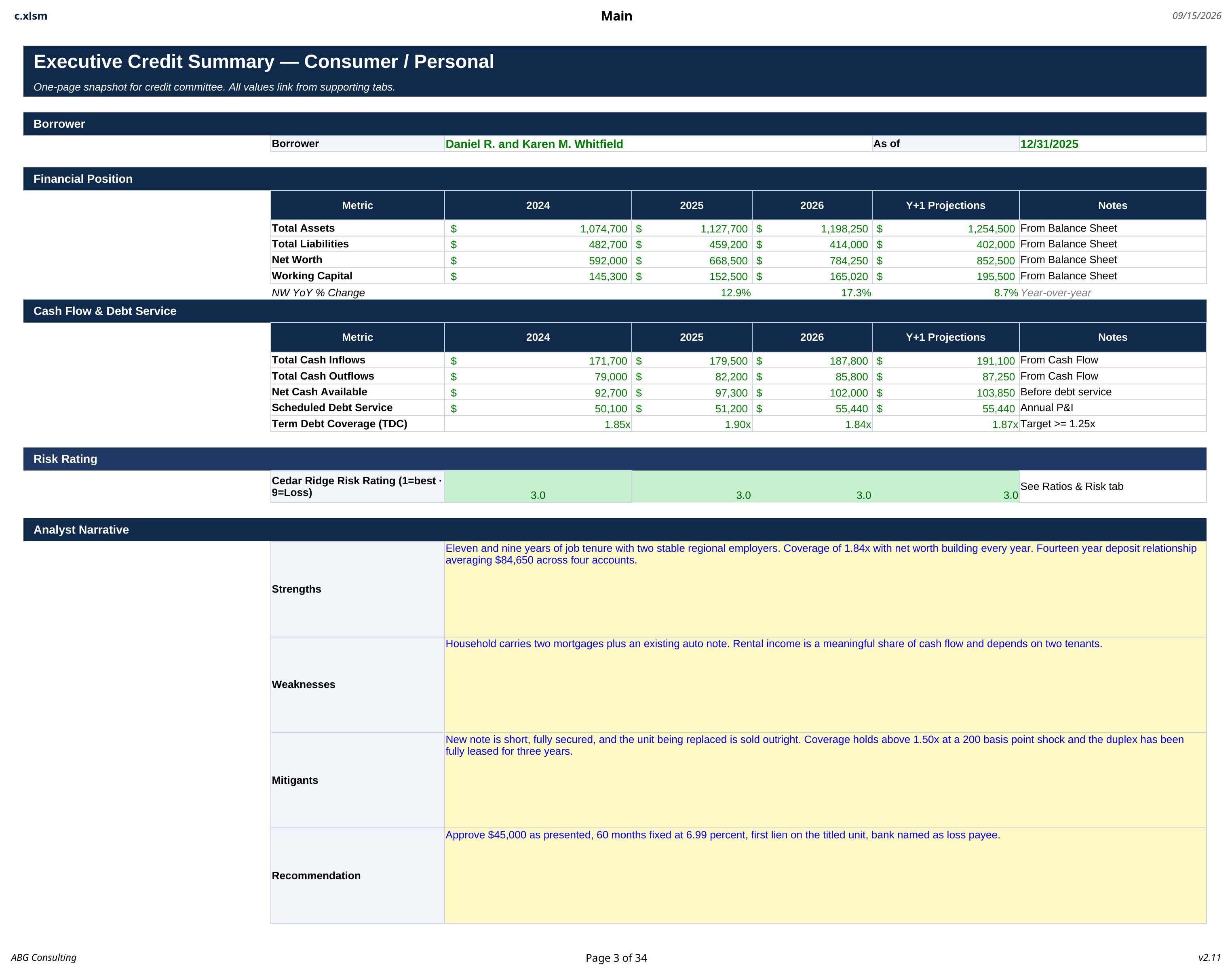
Anatomy of the statement
What the consumer statement actually asks for
Hover a marker to see why that block of the statement exists and what it feeds later in the file.
What this review covers
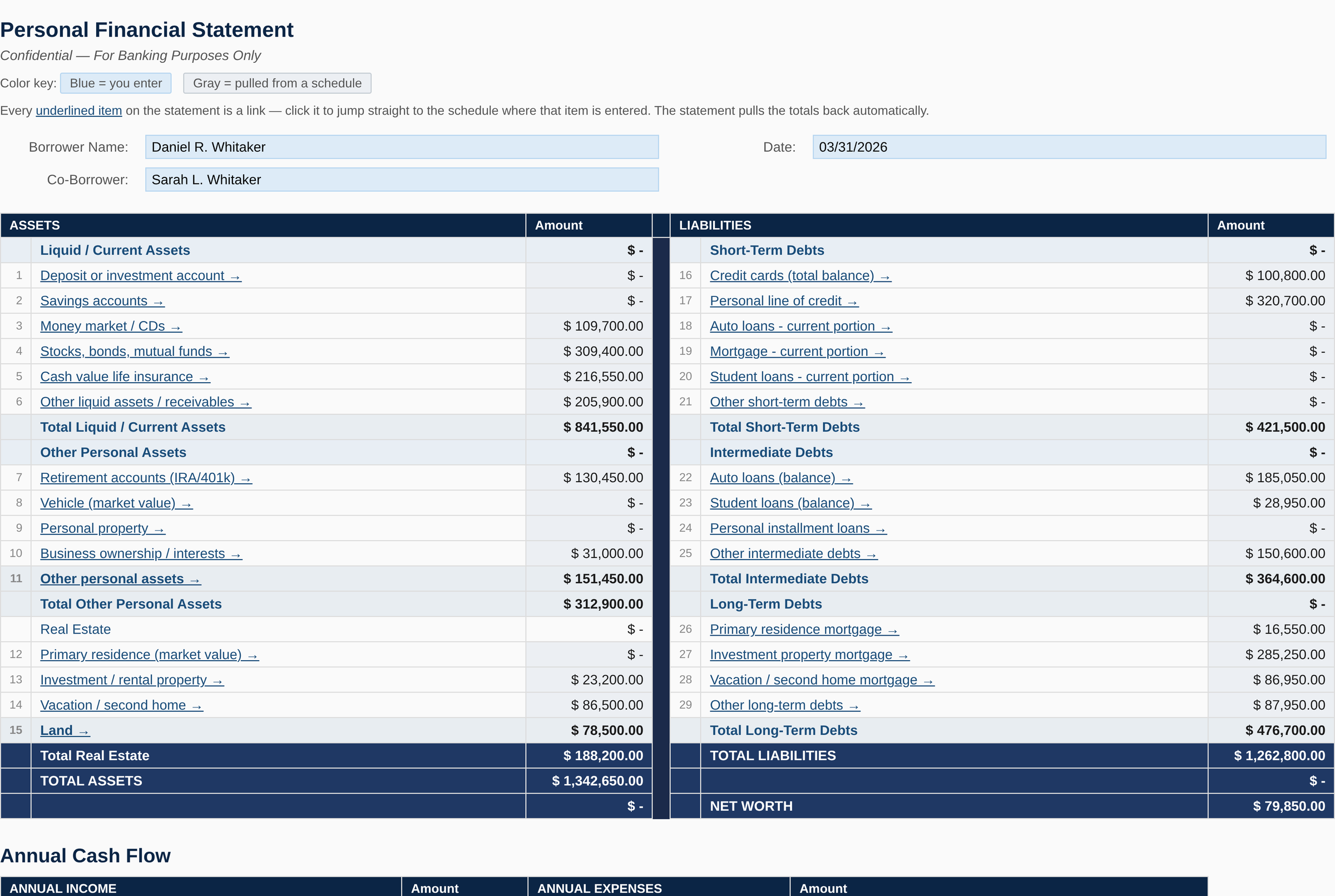
Built for personal balance sheets
Real estate, vehicles, retirement accounts, notes receivable, and personal property each carry their own schedule and roll into the statement.
Debt service you can defend
Every obligation is scheduled with payment, rate, maturity, and lender so total debt service is a number the file can prove.
Collateral tested, not assumed
Advance rates are applied by collateral class so the coverage figure in the memo reflects what the bank would actually lend against.
Inside a consumer file
From the statement to the recommendation
Step one
The balance sheet builds itself
Assets and liabilities land in the right sections as the schedules populate. Net worth updates as the borrower's answers import, so the analyst starts from a finished statement instead of a blank one.
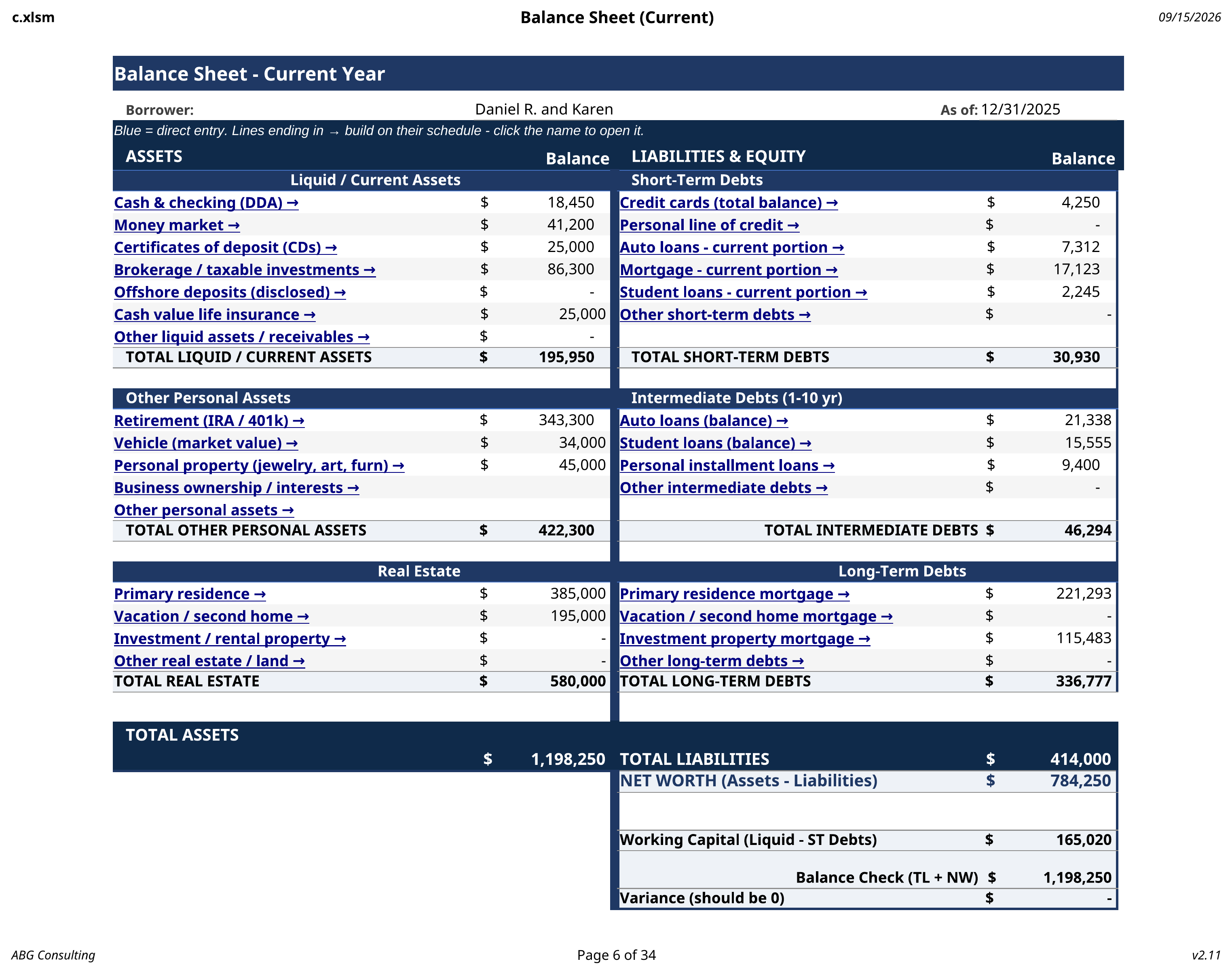
Step two
Cash flow is spread, not estimated
Income lines mirror the return. Recurring income is separated from one-time items so coverage is not inflated by a single good year.
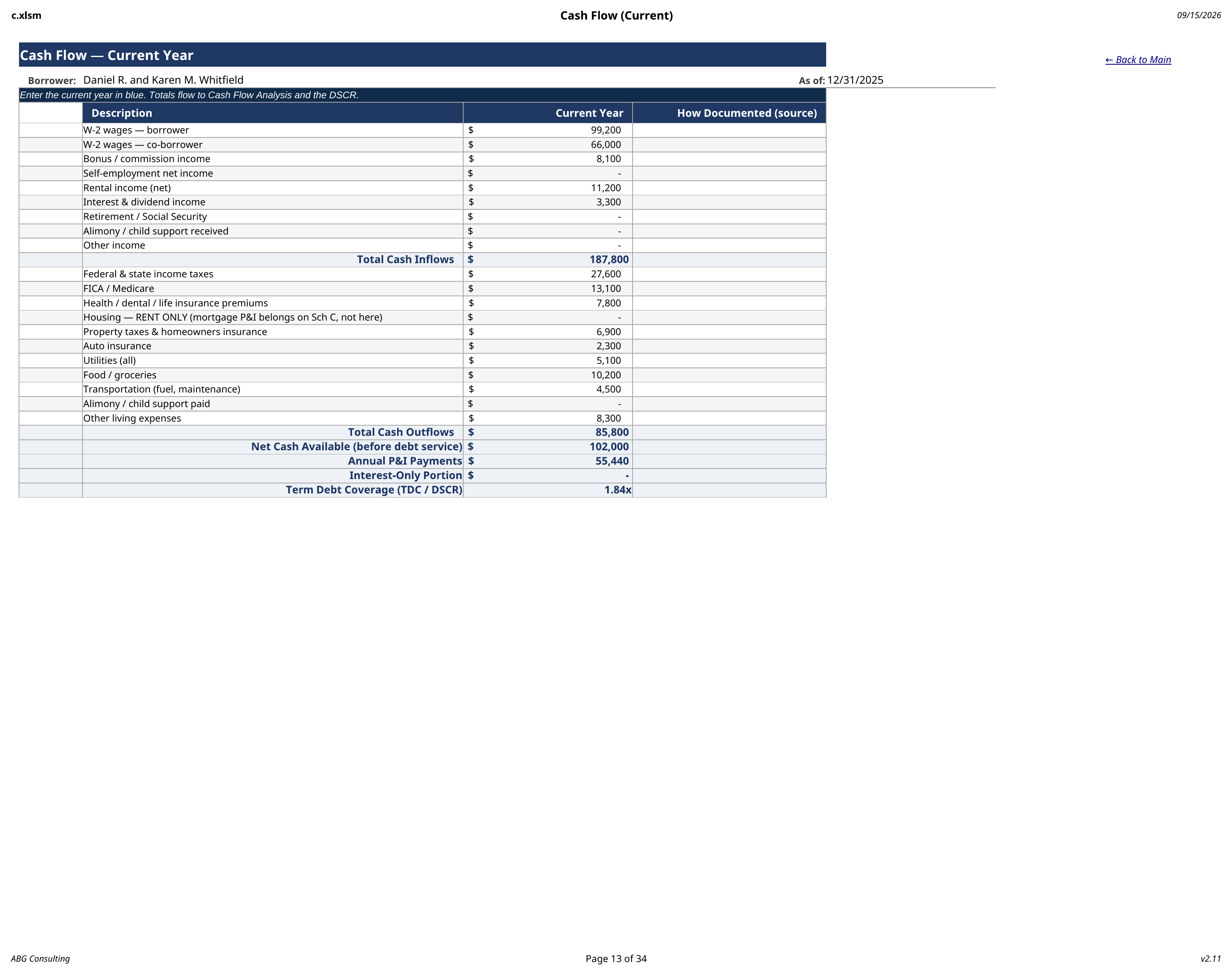
Step three
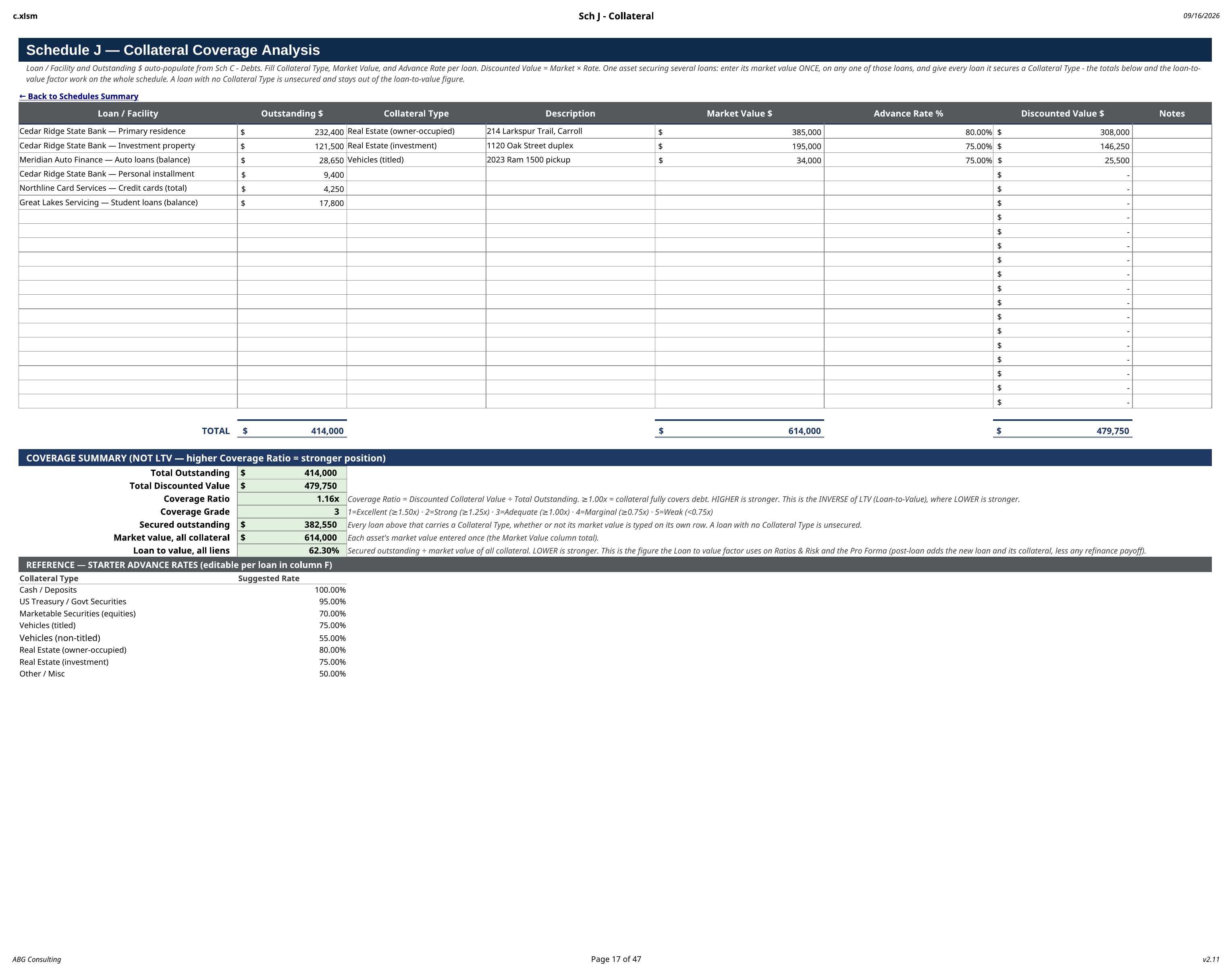
Collateral coverage is calculated
Schedule J applies your advance rates by collateral type and reports the coverage position for the request, before and after the new loan.
The index
What the consumer workbook contains
- 01
Executive credit summary
The one page a committee reads first: request, borrower, grade, and recommendation.
- 02
Current balance sheet
Assets, liabilities, and net worth with every schedule feeding it.
- 03
Schedules summary
An index of every schedule with totals, so nothing is left half filled.
- 04
Debt schedule
Payment, rate, maturity, and lender for every obligation.
- 05
Cash flow analysis
Income and coverage spread from the returns.
- 06
Collateral coverage
Advance rates by class with a coverage position for the request.
- 07
Pro forma balance sheet
The borrower's position after the loan is booked.
- 08
Tax extractor
Personal return figures pulled straight into the spread instead of keyed by hand.
- 09
Credit memo
Generated from the spread with the policy stamp on the page.
Also in the suite