
Ag loan review
A farm operation is nota commercial balance sheet.
Growing crops, breeding livestock, machinery, stored grain, and landlord arrangements each get their own schedule. The spread reflects how a farm actually holds value, and the ratios are graded against the policy limits your bank sets.
- Ag schedulesCrops, livestock, machinery, grain
- SeasonalCash flow built around the crop year
- Your limitsCoverage graded on your policy tab
The season
A farm year does not repay in twelve equal pieces
The operating line peaks before a bushel is sold. The ag review reads the cycle rather than averaging it away.
Operating line usage rises through planting, peaks in early summer, and falls back after harvest.
- Mar
- Inputs and planting draw the line up
- Jun
- Peak exposure before anything is sold
- Oct
- Harvest proceeds pay the line back down
Illustration of a typical crop cycle. The review reads the borrower's own dates and volumes.
What this review covers
Growing crops valued properly
Acres, stage, expected yield, and price assumptions carry into the current asset position instead of being lumped into a single guess.
Livestock split from inventory
Breeding stock is treated as a capital asset and market animals as inventory, so leverage and current ratio are not distorted.
Machinery on a real schedule
Each unit is listed with value and encumbrance, which makes the equipment position clear when the note is secured by it.
Inside an ag file
How the farm balance sheet gets built
Step one
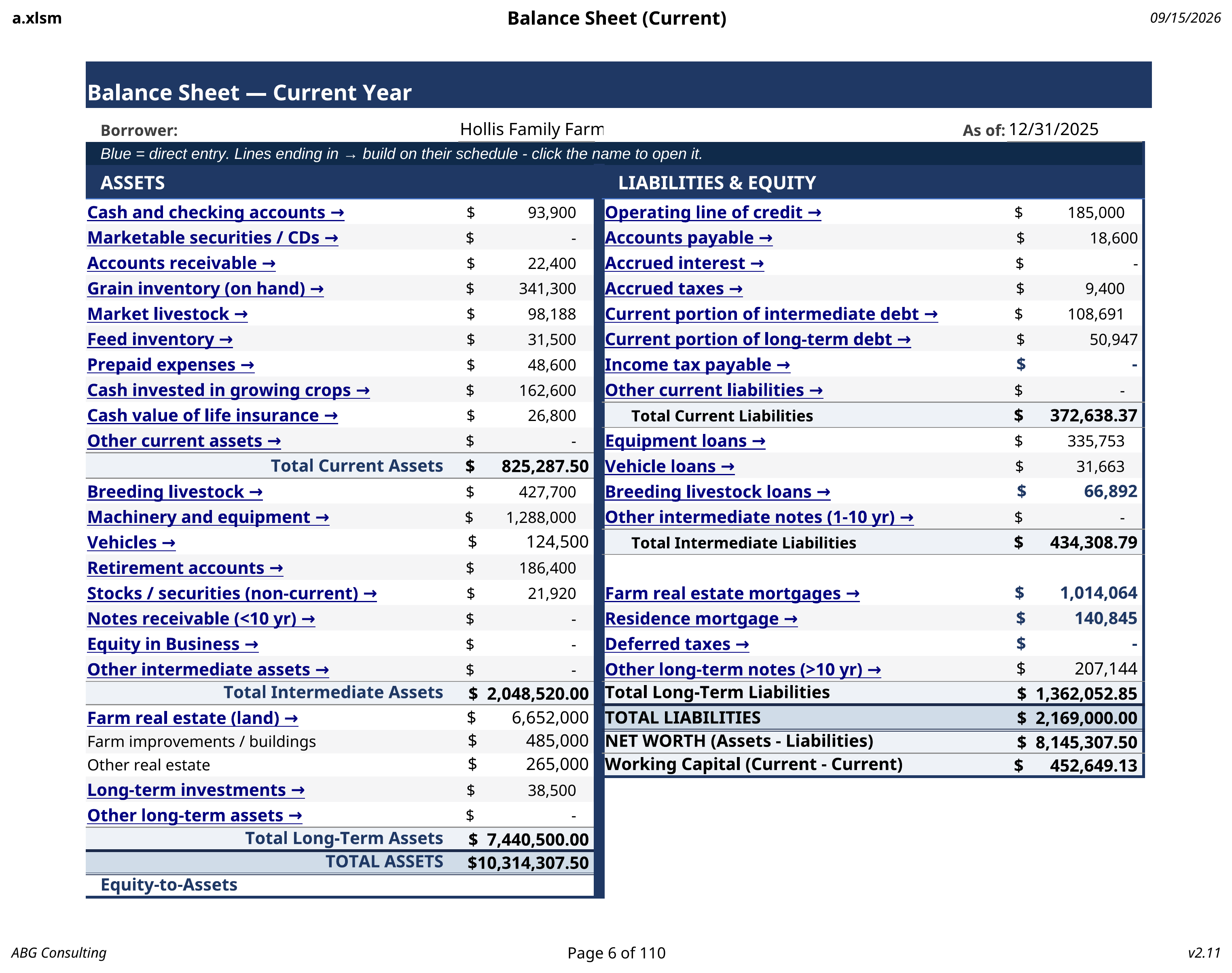
The current balance sheet
Current, intermediate, and long term positions build from the schedules underneath them. Working capital falls out of the statement instead of being estimated.
Step two
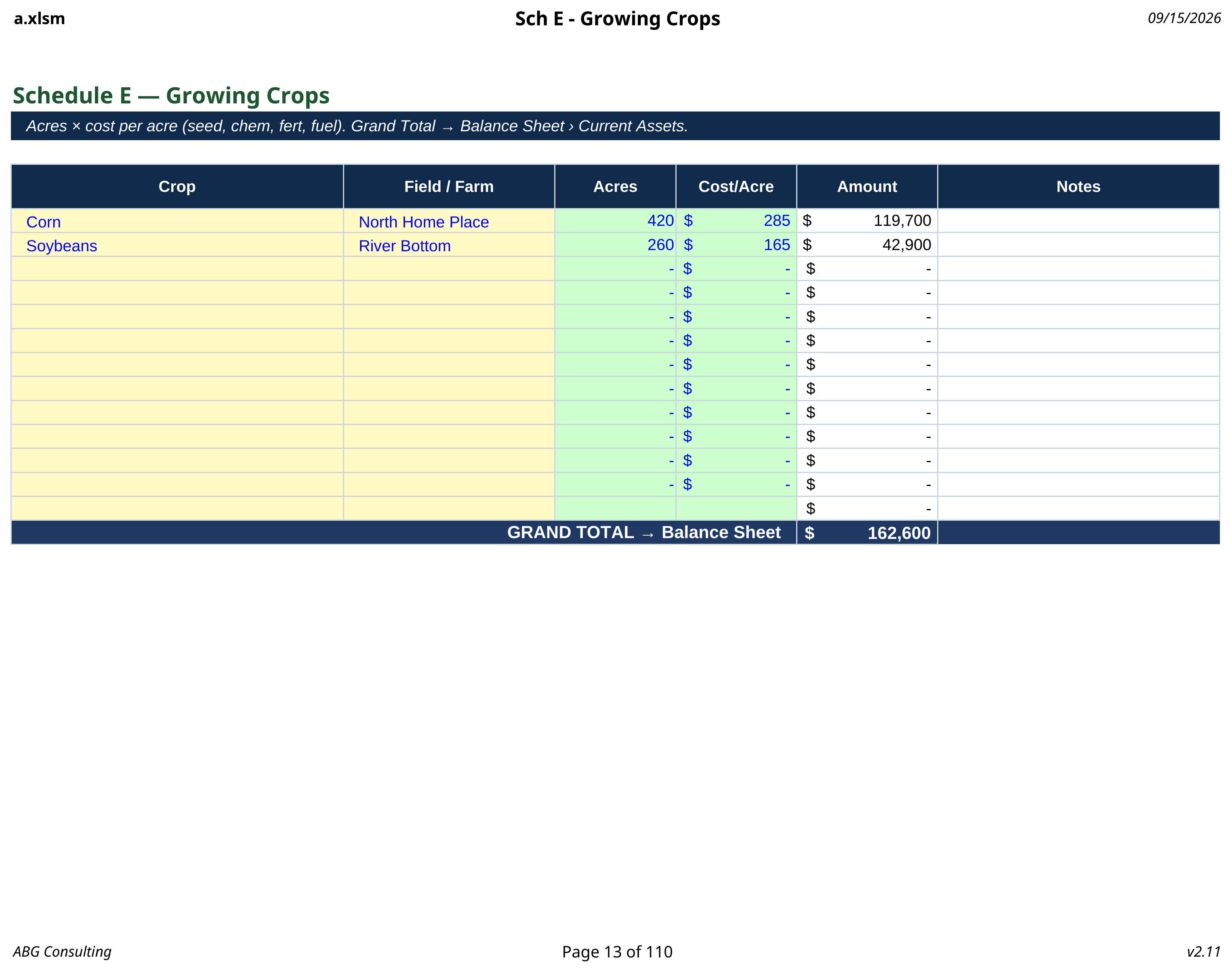
Growing crops carry their assumptions
Schedule E records acres, stage, and the value assumptions behind the crop in the ground, so the current asset figure can be defended line by line.
Step three
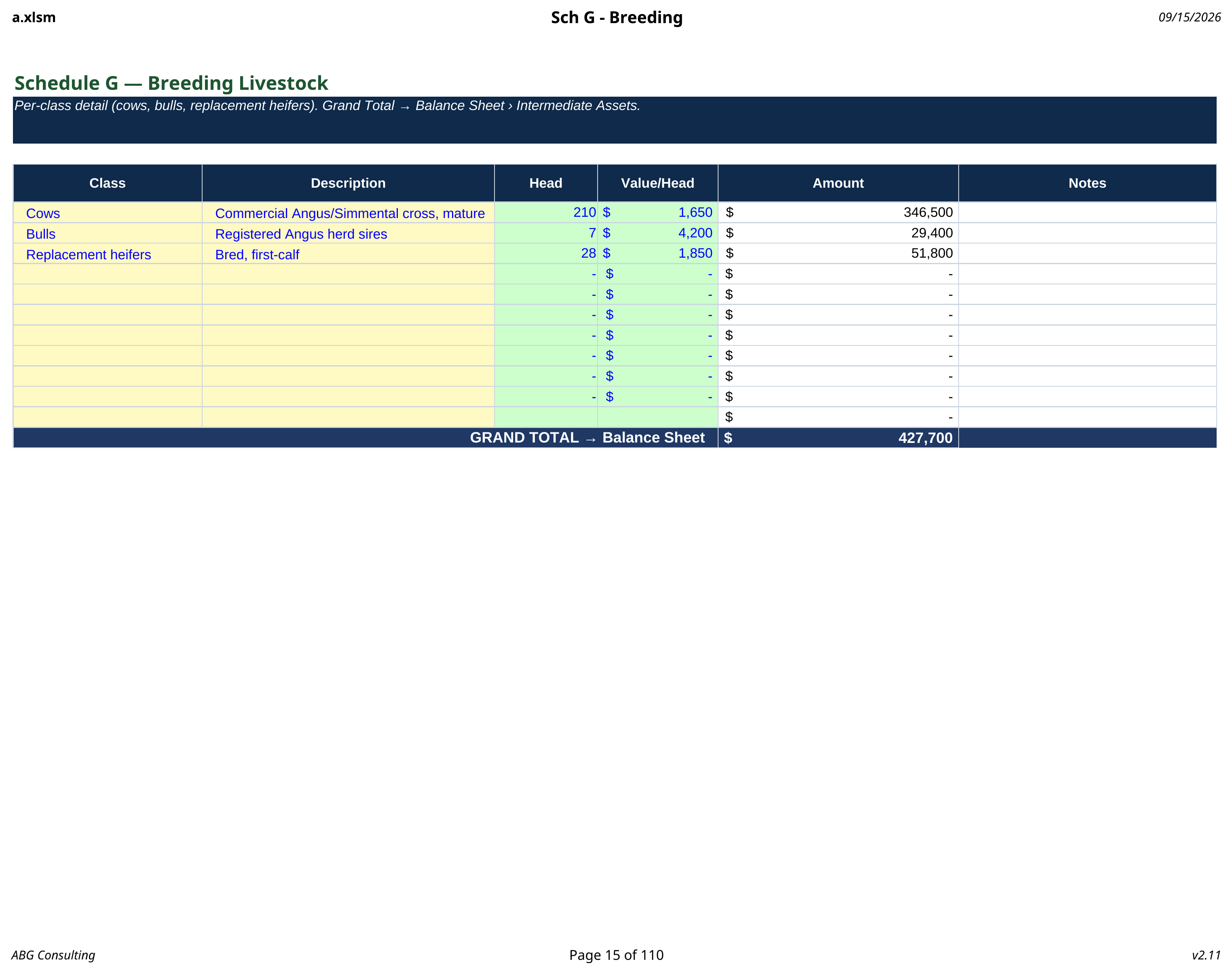
Breeding livestock is a capital asset
Schedule G holds the breeding herd by head and value, separated from market animals so the intermediate asset position is accurate.
Step four
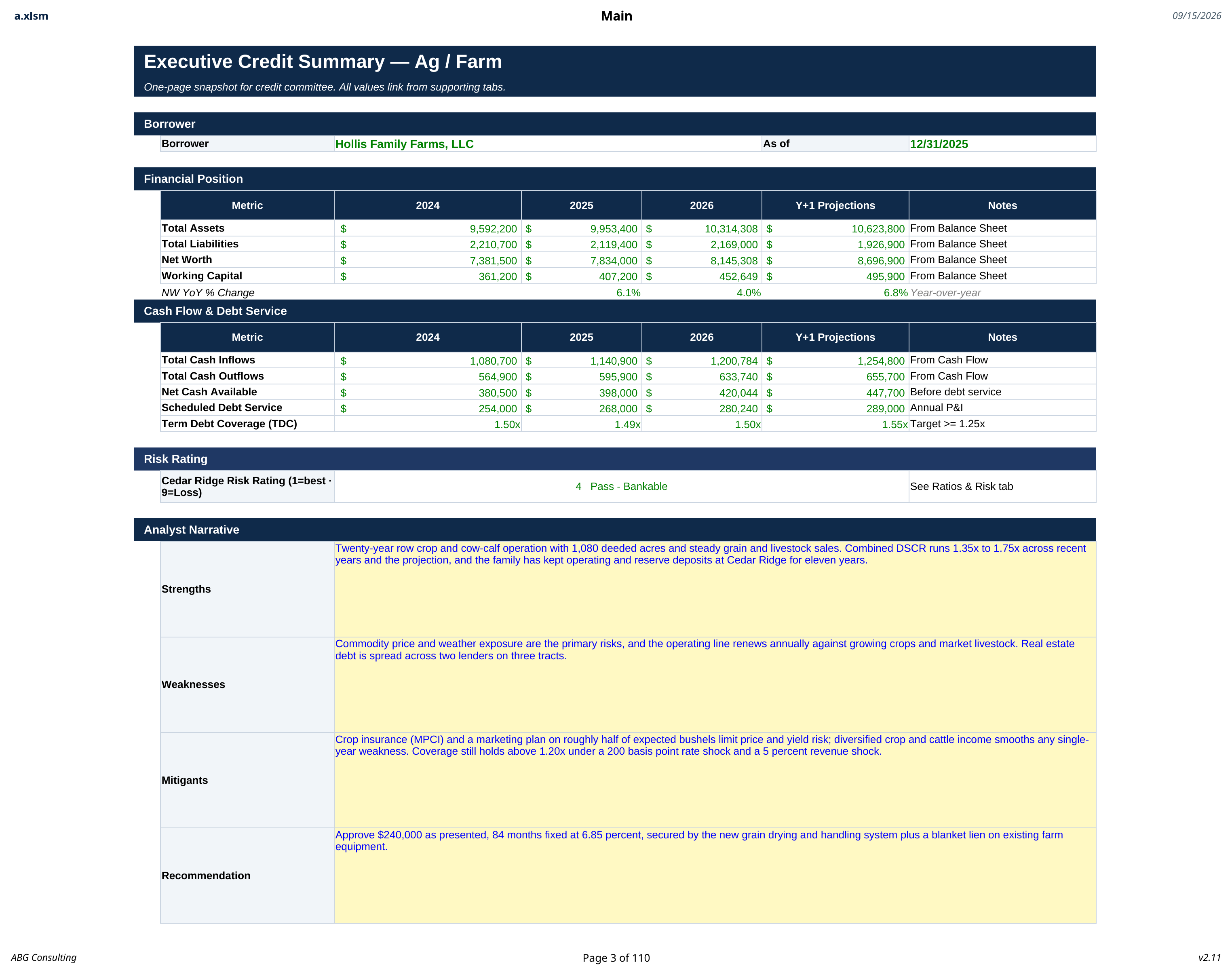
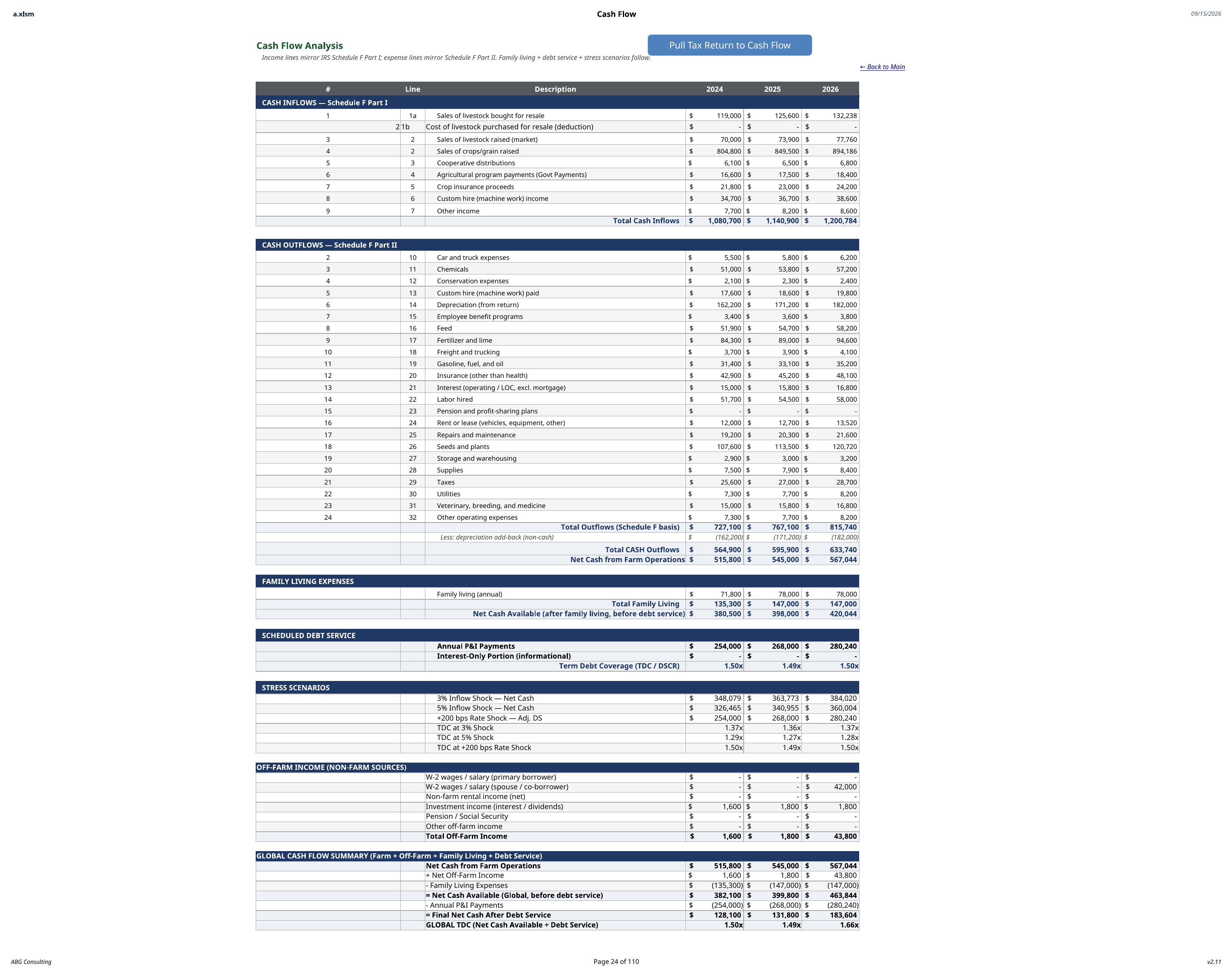
Farm cash flow and coverage
Income lines mirror the return, with government payments and one-time sales handled explicitly. Coverage is graded against the limits on your policy tab.
The index
What the ag workbook contains
- 01
Executive credit summary
The request, the operation, the grade, and the recommendation.
- 02
Current balance sheet
Current, intermediate, and long term positions with working capital.
- 03
Schedules summary
An index with totals across every ag schedule.
- 04
Growing crops
Acres, stage, and the value assumptions behind them.
- 05
Breeding livestock
Head counts and values held apart from market animals.
- 06
Machinery and equipment
Unit by unit with values and encumbrances.
- 07
Cash flow analysis
Farm income spread with coverage against total debt service.
- 08
Pro forma balance sheet
The operation's position after the loan is booked.
- 09
Credit memo
Generated from the spread with the policy stamp on the document.
Also in the suite