
Loan committee review
A short application in.A graded writeup out.
The borrower fills a one page application and emails it back. The importer lands their numbers in the writeup, the officer adds the collateral and the judgment calls, and the debt to income, the risk grade, the policy checks, and the approval record all print on the same document.
- One page inThe borrower never logs into anything
- GradedCedar Ridge 1 to 9 on the bank's own limits
- Examiner readyPolicy set printed on the document
The packet
Read it the way committee reads it
Scroll through the pages in the order they are presented, from the request to the grade and the approval record.
Page 01 of 03
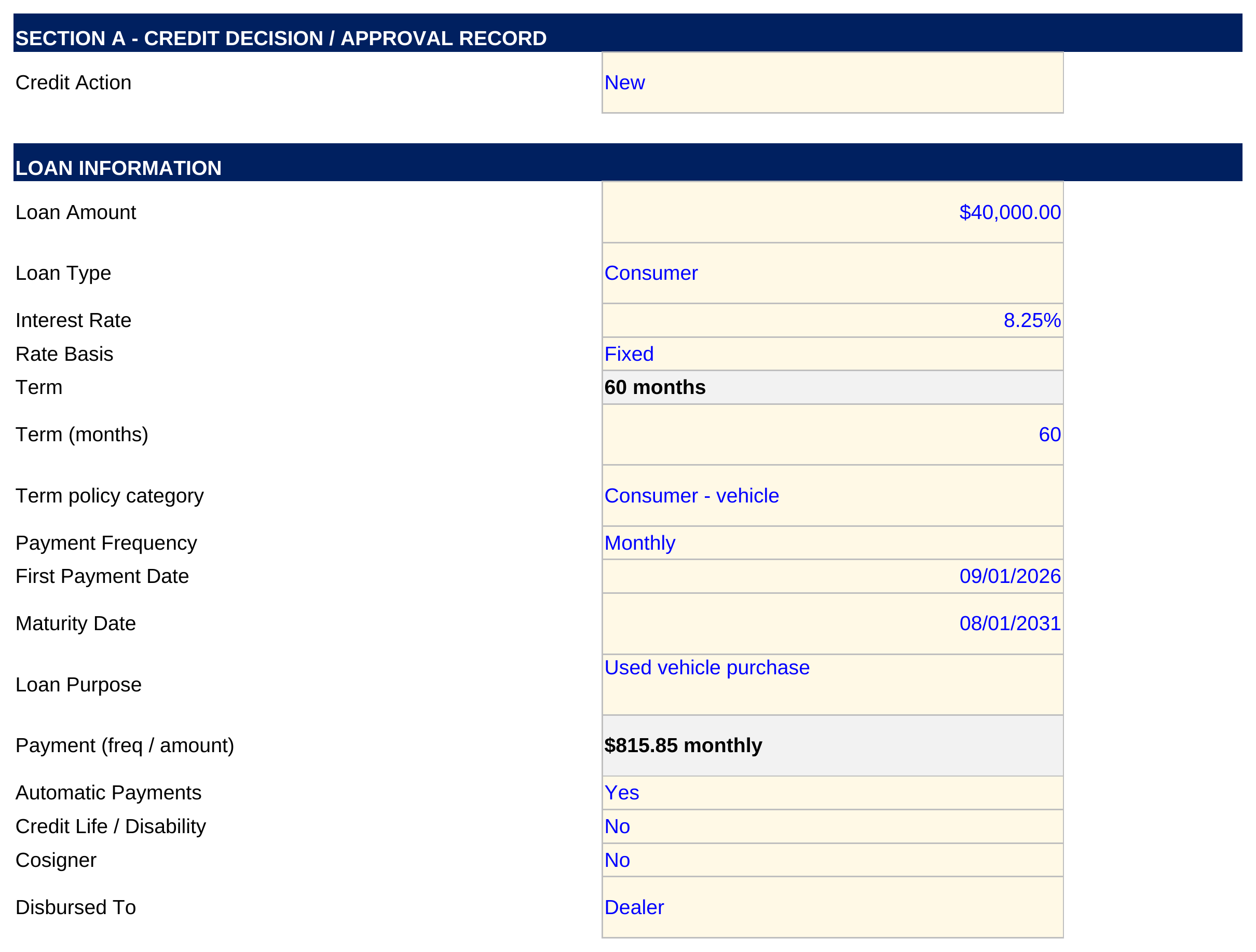
Request and structure
The ask, the rate, the term, and the purpose on the first page, before any exhibit.
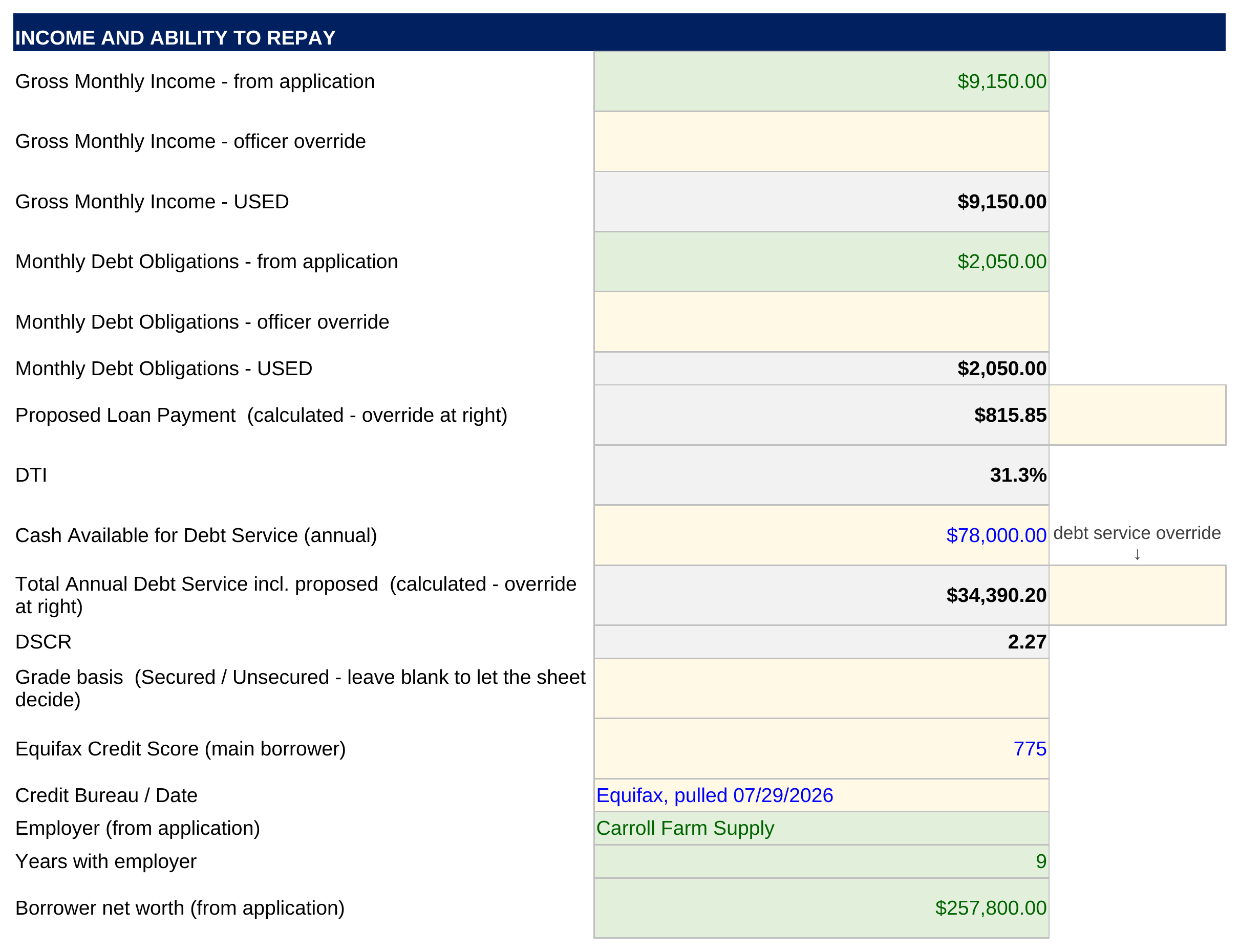
Ability to repay
The borrower's figures, the officer's corrections, and the debt to income the grade actually runs on.
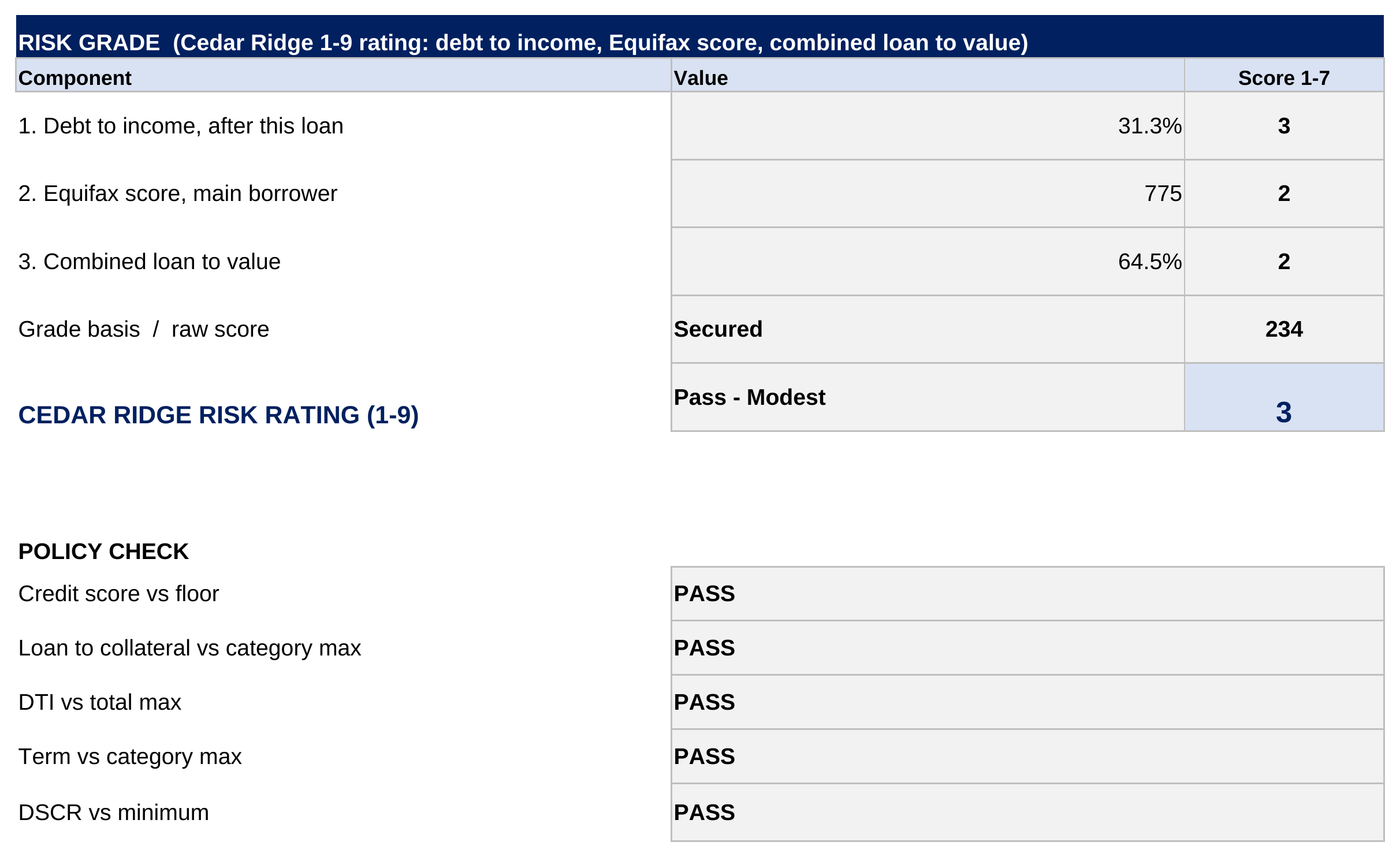
Grade and policy checks
Three weighted factors rolled into the bank's own rating, with five policy checks stated on the page.
What this review covers
The borrower's numbers are never retyped
Income, debts, assets and balances arrive from the short application and land in the green cells. The officer types only what the borrower cannot know: collateral, valuation, lien position, and the credit score.
Override without losing the original
Every income and debt figure shows what the borrower said, the officer correction, and the figure actually used. The grade runs off the used figure and the file still shows both sides.
Five policy checks on every file
Credit score floor, loan to collateral, total debt to income, term by category, and minimum coverage each return PASS or a stated exception, in writing, before committee sees it.
The low doc path
Application to approval, in order
Step one
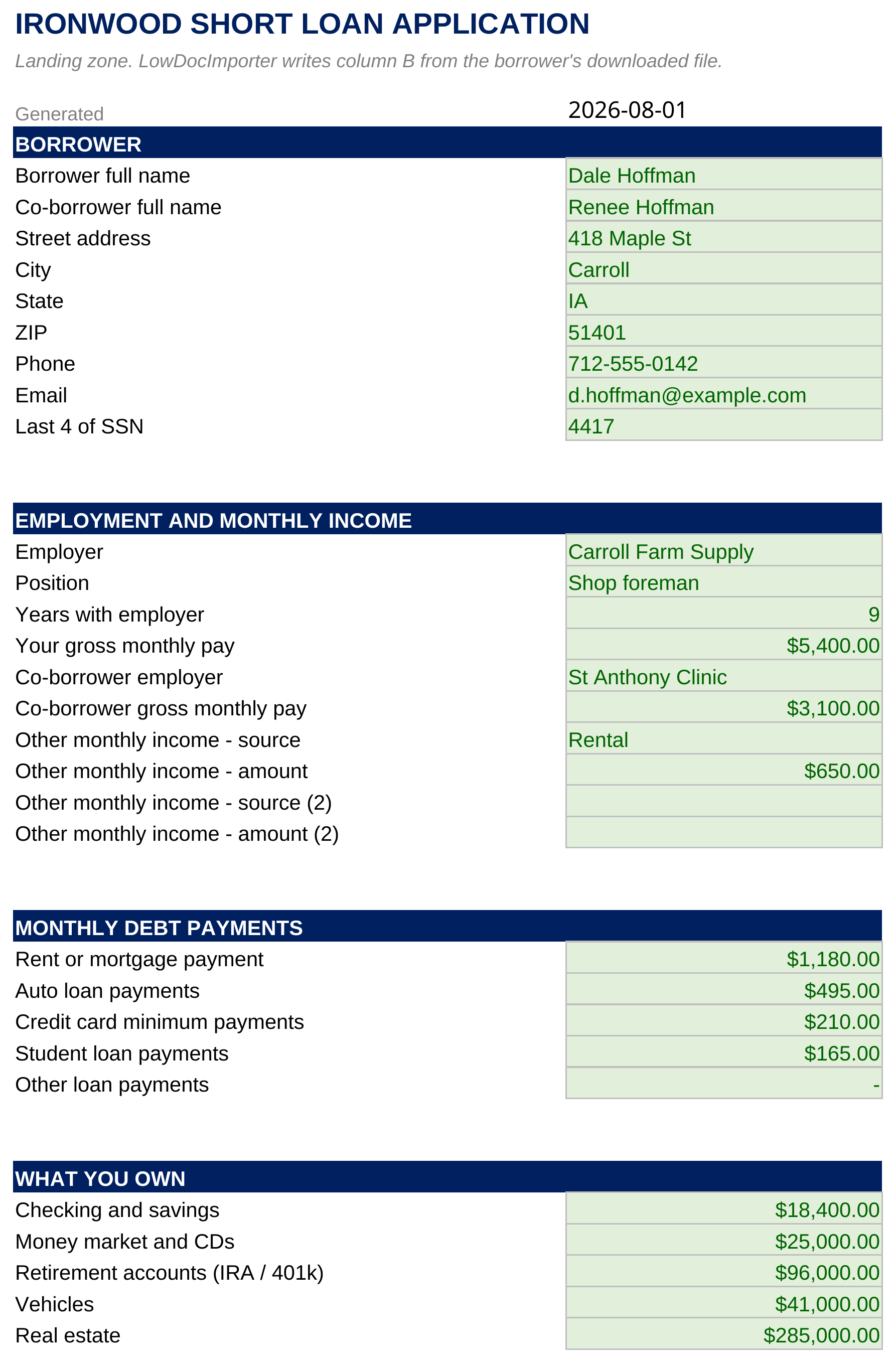
The borrower fills one short form
Name, employment, monthly income, monthly payments, what they own and what they owe. It runs offline, totals itself, and comes back as a file rather than a stack of statements.
Step two
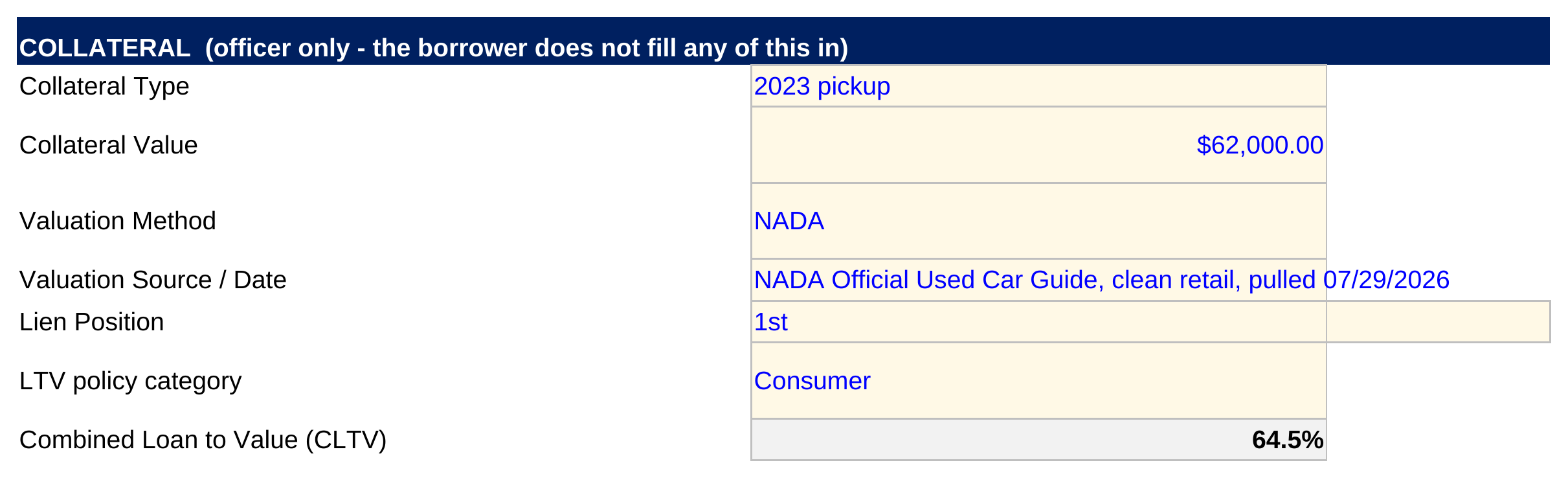
The officer sets the request and the collateral
Credit action, amount, rate, term, payment frequency, purpose, and disbursement. Then the collateral: what secures it, the bank's value, how the value was established, and the lien position.
Step three
Ability to repay is computed, not argued
Debt to income is built from the used income and the used obligations plus the proposed payment, which the sheet calculates from the amount, the rate, and the term. Coverage is shown alongside it when a cash figure belongs in the file.
Step four
The grade and the policy checks print together
Debt to income, credit score, and combined loan to value are each scored, weighted, and rolled into the bank's own 1 to 9 rating. The five policy checks sit directly underneath, so an exception is stated rather than discovered in the meeting.
Step five
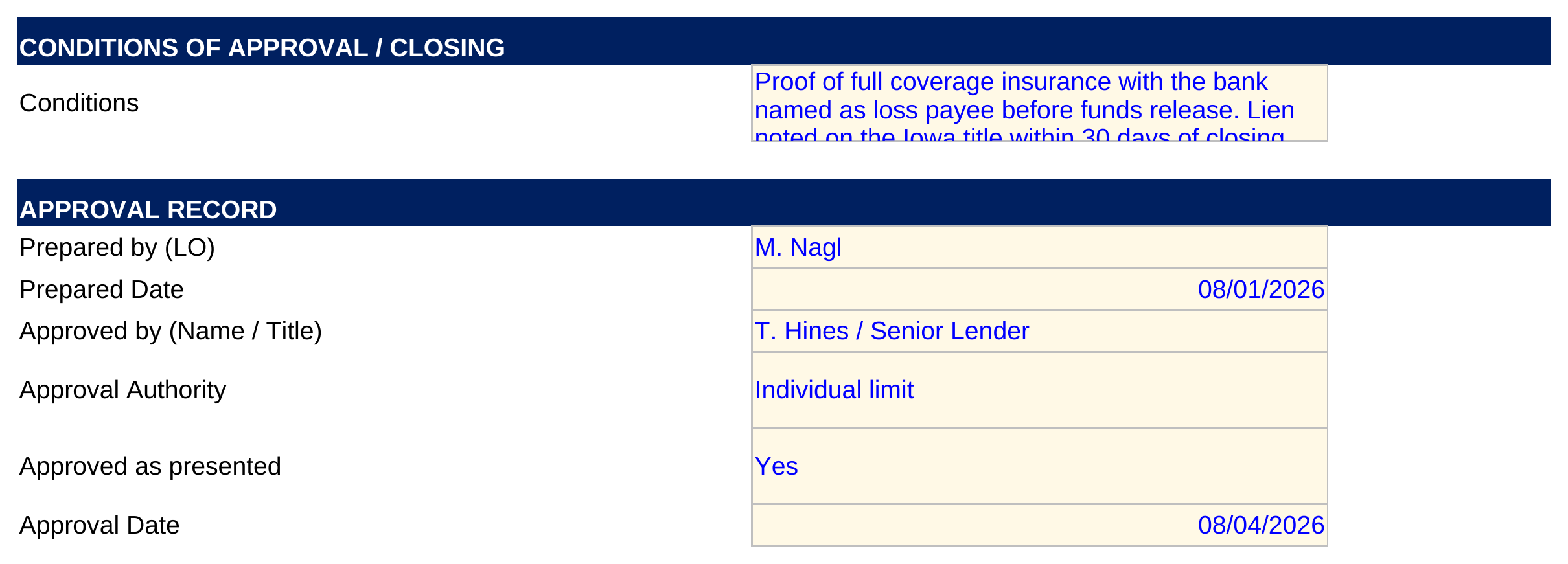
The approval record travels with the file
Conditions of approval, who prepared it, who approved it, the authority it was approved under, and the date. A year later the document still explains itself.
Step six
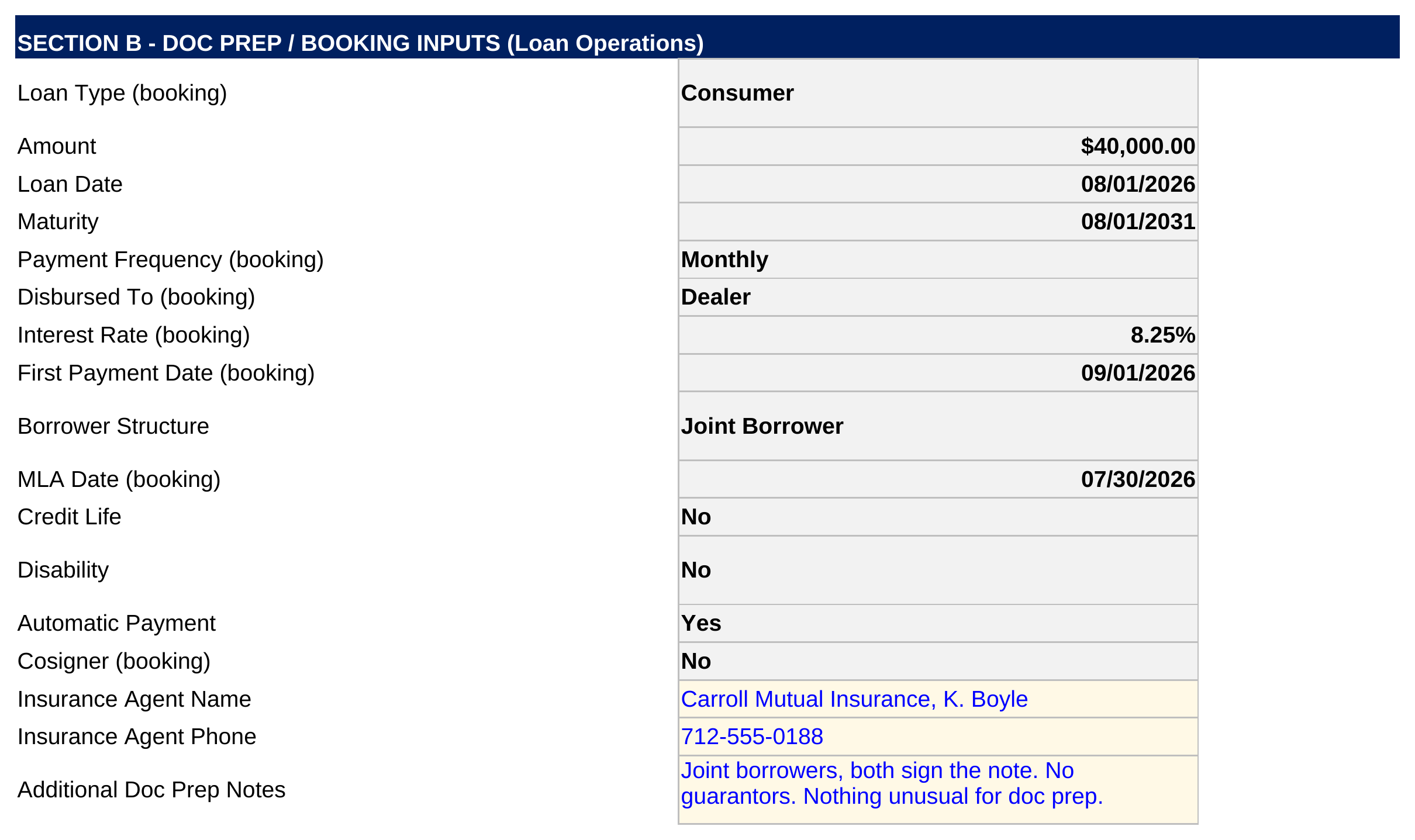
Loan operations books from the same page
The booking section repeats the terms operations needs, carried down from the credit decision above, so nothing is rekeyed between the approval and the note.
The index
What the low doc writeup includes
- 01
Short borrower application
One page, offline, no portal and no login.
- 02
Credit decision record
Action, amount, rate, term, purpose, disbursement.
- 03
Collateral and valuation
Value, method, source, lien position, combined loan to value.
- 04
Ability to repay
Borrower figure, officer override, and the figure used.
- 05
Risk grade
Three weighted factors rolled into the bank's 1 to 9 rating.
- 06
Policy checks
Score, loan to value, debt to income, term, and coverage.
- 07
Exceptions and mitigants
Stated plainly, with the rationale next to them.
- 08
Approval and booking record
Conditions, approver, authority, and doc prep inputs.
- 09
Policy stamp
The limits in force and the date they were taken from policy.